EUV Lithography Technology is the most advanced method used to manufacture cutting-edge semiconductor chips. EUV stands for Extreme Ultraviolet, a form of light with an extremely short wavelength of 13.5 nanometers, which allows engineers to print extraordinarily tiny circuits on silicon wafers. These circuits are essential for modern technologies such as artificial intelligence, smartphones, supercomputers, and advanced military systems.
WHAT IS EUV LITHOGRAPHY AND WHY IS IT IMPORTANT?
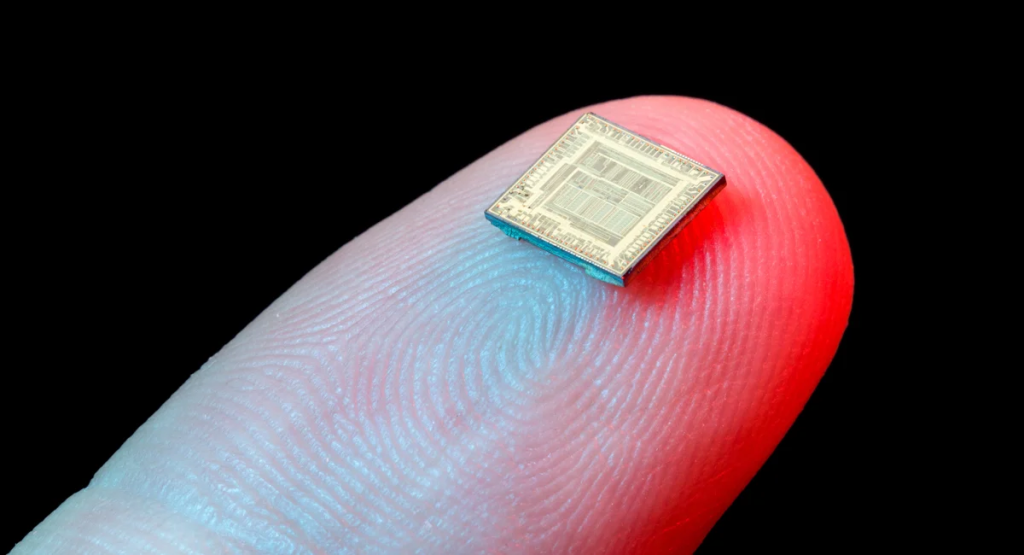
Lithography is the process of transferring circuit patterns onto silicon wafers during chip production. Earlier generations used Deep Ultraviolet (DUV) light, but as chips became smaller and more powerful, DUV reached its physical limits. EUV lithography solved this problem by enabling far finer patterning, making chips faster, more energy-efficient, and more compact.
Without EUV lithography, manufacturing chips below 7 nanometers at large scale would be nearly impossible.
WHO DEVELOPED EUV TECHNOLOGY FIRST?
The scientific idea of EUV emerged from decades of research in the United States, Europe, and Japan. However, ASML Holding N.V., a Dutch company founded in 1984, was the first and remains the only company to successfully turn EUV into a commercial, industrial machine.
ASML achieved this after more than 30 years of continuous research and development, overcoming enormous engineering challenges that many experts once believed were unsolvable.
WHO CONTROLS EUV TECHNOLOGY?
EUV lithography is controlled by a small group of allied countries through a tightly integrated supply chain:
- Netherlands :- ASML (system integration)
- Germany :– Zeiss (ultra-precision mirrors)
- United States :– plasma light source, software, key patents
- Japan :– precision components and materials
Because of its strategic importance, EUV is treated as a national-security technology, not merely a commercial product.
HOW CHINA TRIED TO OBTAIN EUV TECHNOLOGY
China has made strong efforts to close the semiconductor gap by:
- Recruiting foreign engineers with experience at ASML, TSMC, Intel, and Samsung
- Investing billions of dollars in domestic semiconductor research
- Studying patents and academic publications, which is legal but limited in effectiveness
There have been allegations and legal cases involving older lithography technologies (DUV), but no verified evidence shows that China has stolen or reproduced EUV technology. Importantly, China has never possessed an EUV machine, making true reverse engineering impossible.
HOW AND WHY THE USA BLOCKED EUV EXPORTS TO CHINA
The United States considers advanced semiconductor manufacturing a strategic and military-critical capability. As a result:
- The U.S. pressured the Dutch government to block ASML from exporting EUV machines to China
- Export restrictions began around 2019
- Later controls expanded to cover advanced DUV equipment as well
The justification was national security, since advanced chips can be used in artificial intelligence, surveillance, cyber warfare, and weapons systems. Because EUV machines contain US-origin technologies and patents, ASML must comply with these restrictions.
WHY CHINA CANNOT MAKE EUV TECHNOLOGY (SO FAR)
China’s difficulty in producing EUV lithography is due to several deep structural reasons:
- Extreme complexity :– EUV requires atomic-level precision; mirrors must be accurate within a few atoms.
- Missing ecosystem :– No single country can build EUV alone, and China lacks access to critical suppliers like Zeiss and US light-source technology.
- Time and experience :– ASML’s success is the result of decades of trial, failure, and refinement.
- Export controls :– China cannot import key components or tools needed for EUV development.
- Manufacturing know-how :– Engineering talent alone cannot replace an entire industrial supply chain.
CONCLUSION
EUV Lithography Technology represents one of the most complex engineering achievements in human history. While China continues to advance rapidly in semiconductor manufacturing using older techniques, EUV remains beyond its current reach. ASML’s dominance shows that in modern technology, money and talent are not enough without time, cooperation, and a global ecosystem.
Today, EUV lithography stands at the center of global technological and geopolitical competition and ASML remains its undisputed leader.